
In the world of retail, the layout and visual merchandising of a commercial space play a strategic role in enhancing product value and shaping the customer’s shopping experience. Among the key elements of an effective store layout, display stands are essential: they act as containers, visual supports, and direct communication tools between the brand and the consumer.
Selecting the right display system is therefore crucial—not only to express brand values, but also to optimise space and drive sales.
However, the market offers a wide variety of display stand types, made from different materials and designed to meet diverse merchandising needs. In this article, we’ll explore the main categories of retail display stands, with a focus on the benefits of metal display systems: versatile, durable, customisable, and ideal for integrated interior retail design projects.
Main types of retail display stands
Before delving into materials, it’s useful to classify display units by type and function. Each category serves a specific layout, visibility, and customer interaction goal:
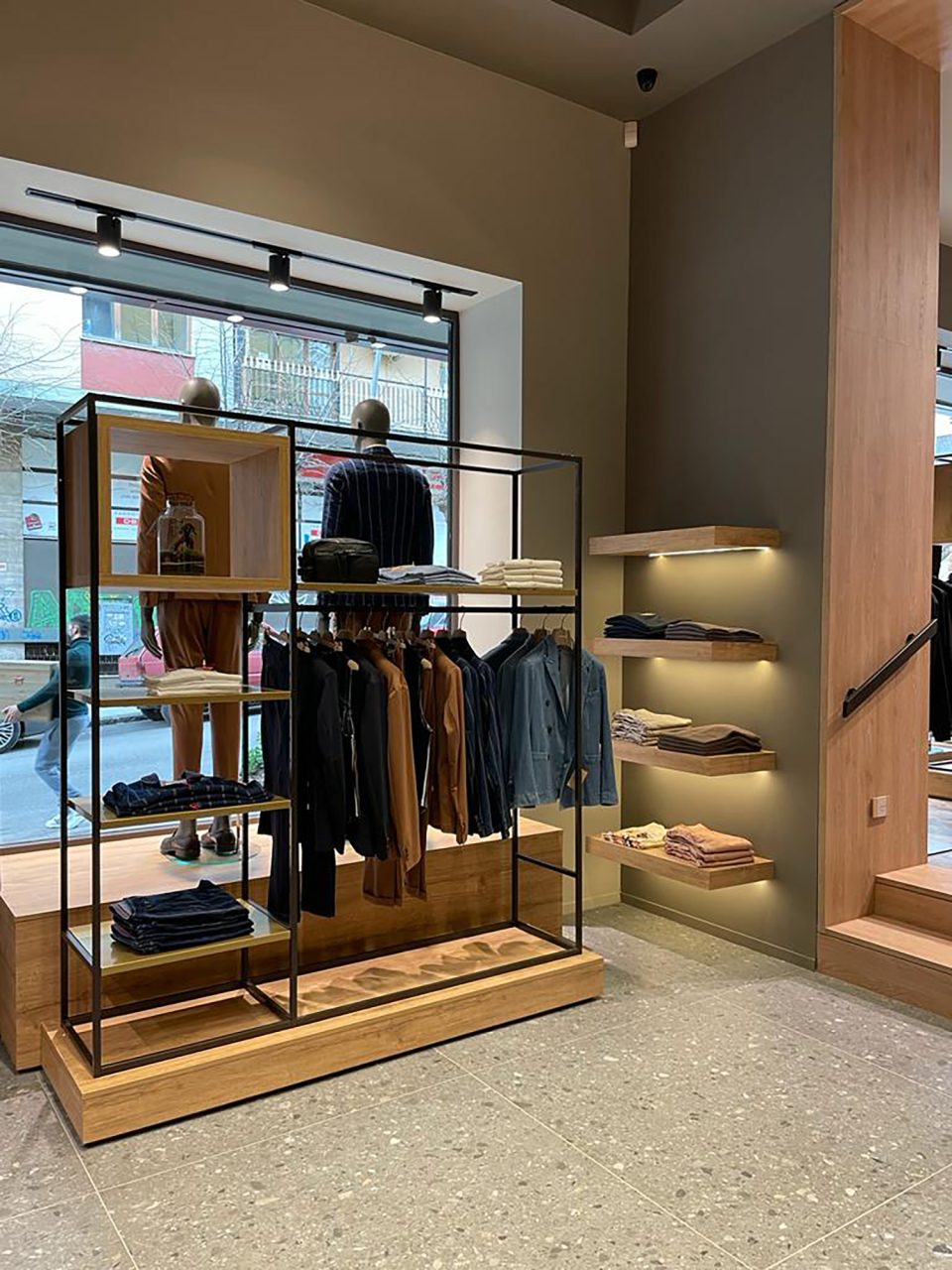
- Mobile display units with wheels: Ideal for dynamic retail environments, allowing easy reconfiguration of the space.
- Central displays or gondolas: Positioned in the middle of the shop floor, these units are used to define customer pathways and thematic zones. Often double-sided with adjustable shelves, they are ideal for fast-moving items or seasonal promotions.
- Free-standing displays: Independent units that require no anchoring, including vertical structures with hooks or shelving.
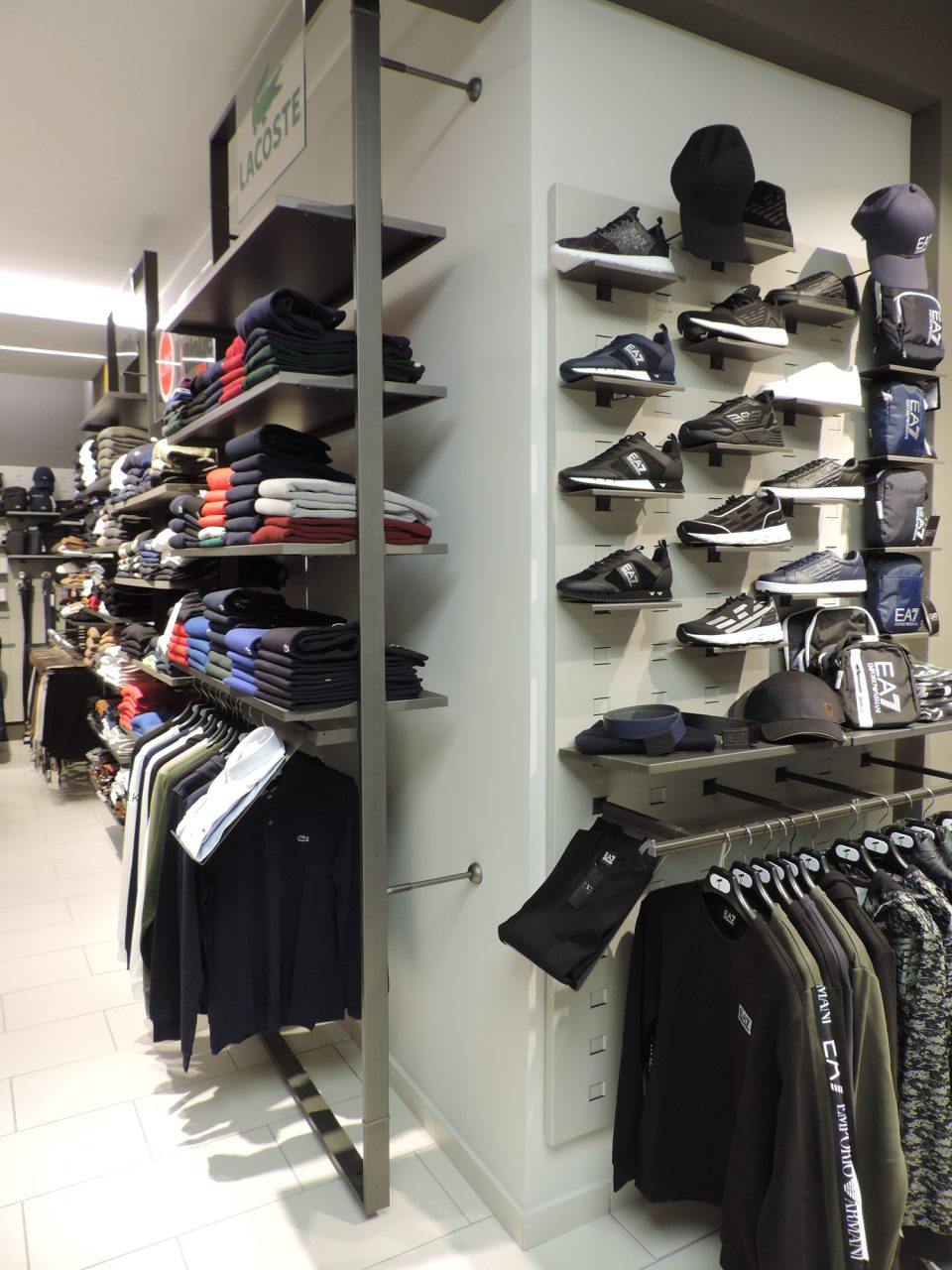
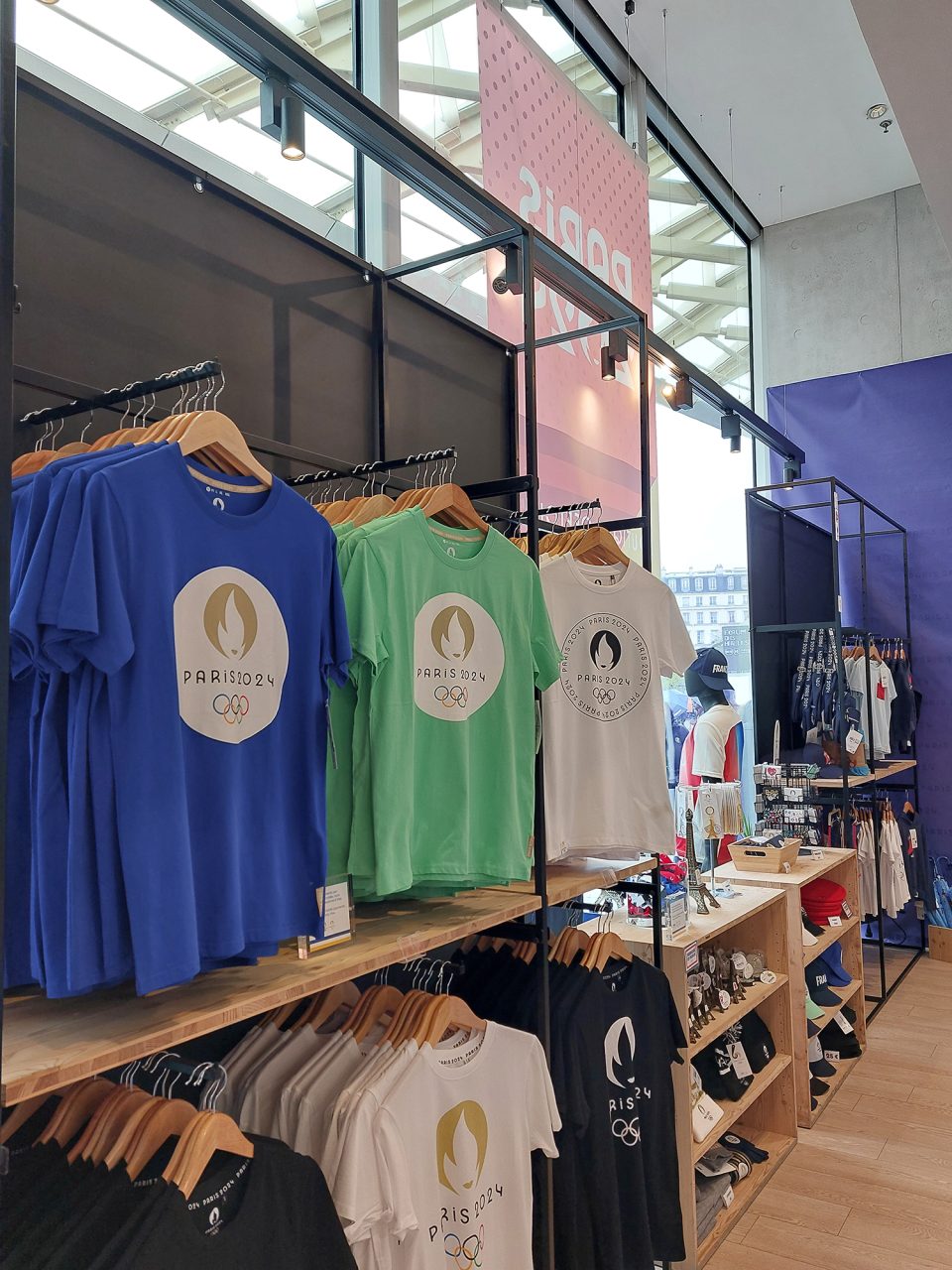
- Wall-mounted displays: Optimise vertical space by utilising walls for clean, accessible product presentation, with options including shelves, grids or hanging bars.
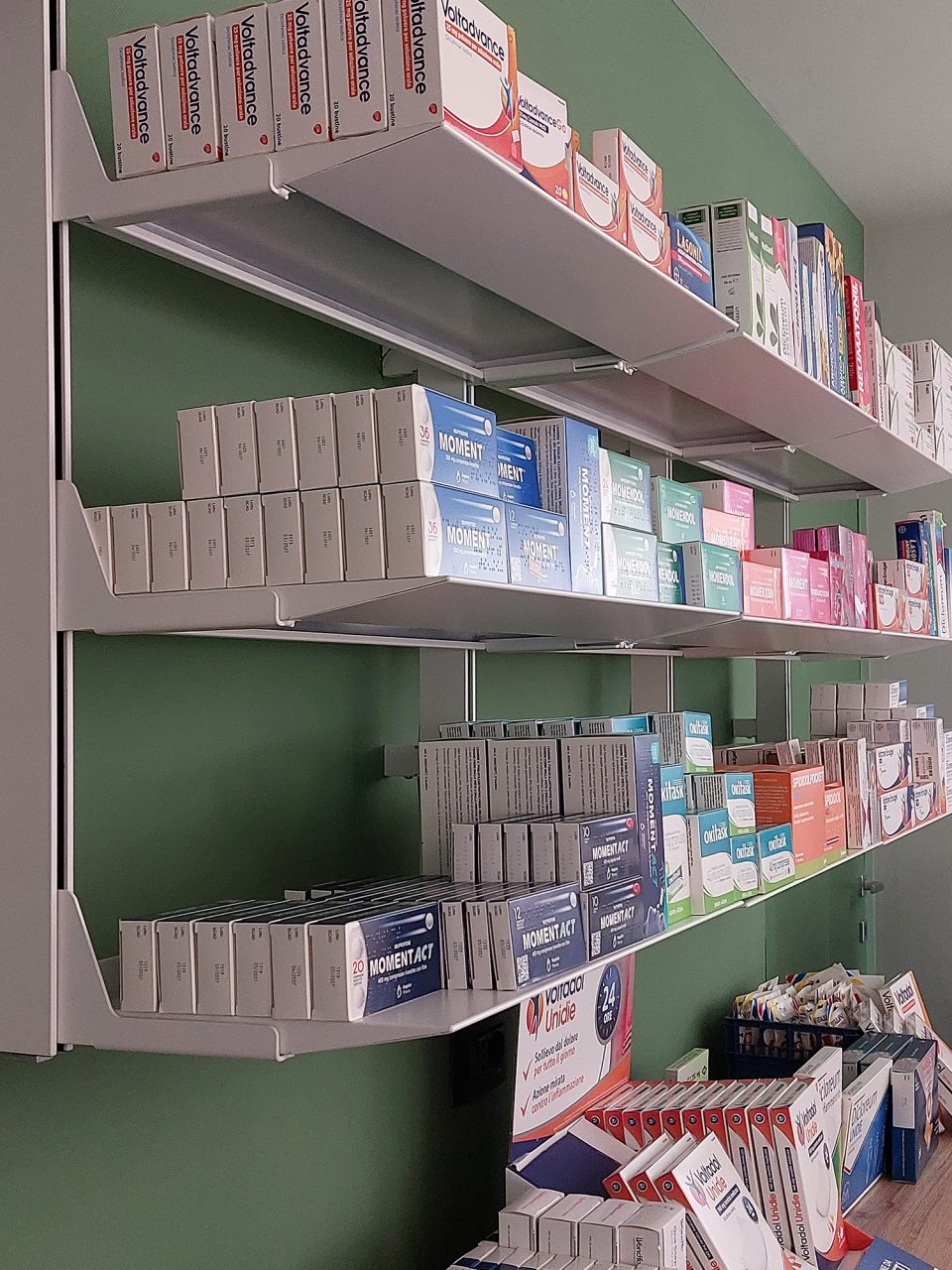
- Displays with shelving: Depending on the product type and the desired aesthetic, retailers can choose from a range of shelf materials. Glass shelves offer elegance and are ideal for delicate or premium items. Metal shelvesensure robustness and a technical or industrial look. Wooden shelves provide warmth and are well-suited to inviting, lifestyle-oriented spaces.
- Countertop displays: Hybrid solutions that combine display and support functions, often used in promotional corners or demo areas.
Materials compared: Cardboard, plastic, wood and metal
Retail display stands are also differentiated by the materials used—each affecting durability, aesthetics, sustainability and cost.
Cardboard displays: Primarily used for promotional campaigns, they’re lightweight, low-cost and easily customisable. Ideal for short-term use, but unsuitable for heavy products or long-term installations.
Plastic displays: Resistant and easy to clean, though with a higher environmental impact and often less suitable for premium retail environments.
Wooden displays: Aesthetic, warm, and elegant—often chosen for natural-looking retail settings. However, wood is less modular and offers limited flexibility in terms of design alterations.
Metal displays: The most durable and versatile solution. Metal fixtures are suitable for high-traffic, long-term use and fit seamlessly into diverse commercial contexts—from flagship stores to multi-brand retailers.
Their solid structure supports modular configurations, combinations with other materials, and extensive aesthetic customisation.
Explore our range of display systems designed to maximise merchandising performance and adapt to every retail setting.
The advantages of metal sisplay systems
Choosing metal display stands means investing in a long-lasting, flexible and fully integrated solution aligned with contemporary retail design. Key advantages include:
- Modularity: Each component can be combined, expanded or reconfigured as required.
- Flexibility: Suitable for a wide range of product types and market segments.
- Structural stability: Ensures safety, even under heavy loads.
- Customisation: Available in various finishes, colours, accessories and shapes to reflect brand identity.
- Technology integration: Supports the installation of integrated LED lighting systems.
The importance of a cohesive brand image
An effective display system must harmonise with the store’s visual identity, acting as a powerful marketing tool. Thanks to the flexibility of metal systems, it’s possible to:
- Choose from a wide range of colours and finishes (matte, glossy, metallic or wood-effect powder coatings)
- Integrate custom logos and branded graphics
- Maintain stylistic consistency
- Define the target audience
- Shape the customer flow through the store
- Support the brand’s commercial objectives
In close collaboration with interior designers and marketing managers, choosing the right display solution becomes a strategic investment to enhance the store’s attractiveness and strengthen brand positioning.
Conclusion: how to choose the right display system for your store
The sheer variety of display units available on the market can make selection challenging. Here are some practical tips to guide your decision:
- Assess your space: How much space do you have and how is it currently used?
- Understand your product mix: Are the items heavy, fragile, promotional or part of a regular range?
- Consider flexibility: Will you need to rearrange displays frequently?
- Think about brand consistency: Should the display align with your store’s visual identity and layout?
- Consult professionals: A well-designed display can elevate the customer experience and increase sales.
Explore our display system collection to find the ideal solution for your store. We offer both ready-to-install retail lines and fully customised solutions—designed in collaboration with you to meet your functional and aesthetic goals.
Contact us for a tailored consultation: we turn your merchandising needs into effective tools for communication, engagement and sales.